

Navigating VAT: A Guide for the Growing UK Small Business
For many UK entrepreneurs, VAT is a three-letter word that signals a rite of passage. It’s the moment your side hustle or small venture officially graduates into a serious business.
But with registration comes responsibility. As of April 2026, the rules have settled into a new rhythm, and staying ahead of them is the difference between a smooth-running operation and a surprise bill from HMRC. Here is everything you need to know about VAT registration for your small business.
The Magic Number: £90,000
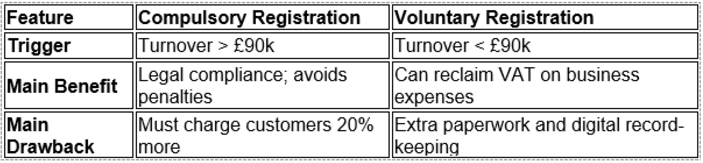
The critical figure for any UK business is £90,000. This is the VAT registration threshold. You must register for VAT if:
The Backward Look: Your taxable turnover exceeds £90,000 over any rolling 12-month period (not a calendar or tax year).
The Forward Look: You expect your turnover to exceed £90,000 in the next 30 days alone.
Note: If you cross the threshold temporarily (e.g., a one-off big contract), you can apply for a registration exception, but you must prove to HMRC that your turnover will drop back down immediately.
Compulsory vs. Voluntary: Should You Join Early?
Just because you haven't hit £90,000 doesn't mean you can't register. Voluntary registration is a strategic move for many.
Why register early?
Reclaiming Costs: If you buy expensive equipment or stock, you can claim back the VAT you paid.
B2B Credibility: Large corporate clients often prefer working with VAT-registered suppliers; it can make you appear more established.
Zero-Rated Sales: If you sell zero-rated goods (like most books or children's clothing), you don't charge VAT but can still reclaim it on your costs.
Choosing the Right Scheme
HMRC offers several VAT schemes to help small businesses manage their cash flow and admin:
Standard Accounting: You pay VAT based on the date of your invoices.
Cash Accounting Scheme: Brilliant for cash flow. You only pay HMRC when your customer actually pays you. This is available if your turnover is under £1.35 million.
Flat Rate Scheme: To simplify things, you pay a fixed percentage of your turnover to HMRC (e.g., 14.5% for IT consultants). You keep the difference between what you charge and what you pay, but you usually can't reclaim VAT on purchases.
Making Tax Digital (MTD)
As of 2026, Making Tax Digital is no longer optional for any VAT-registered business. You cannot simply log in and type numbers into a box on the HMRC website.
You must:
Keep digital records of all transactions.
Use compatible software to submit your returns directly to HMRC.
Summary Checklist for 2026
Monitor your turnover monthly on a rolling 12-month basis.
Check your prices. If you register, can your customers handle a 20% price hike, or will you have to eat that cost?
Get the software ready. Ensure your bookkeeping is digital from day one to avoid a headache later.
Consult a pro. VAT law is famous for its quirks (the difference between a Jaffa Cake and a biscuit is a legal legend for a reason). A quick chat with an accountant can save you thousands.
Registration isn't just a tax hurdle—it's a sign that your business is thriving. Handle it with a plan, and it becomes just another tool in your financial kit.